

Healthy Habits: Toe Spacers
Yes, it’s time to talk about feet again. Why? Simply put—our feet matter. They are our foundation as bipedal (two-legged) humans. They connect us to the ground and help initiate our entire sense of balance, stability, and strength as we move through life. This is especially true for people who ask a lot of their feet—dancers, runners, and anyone spending long hours on them each day. There are many important aspects of foot care that set us up for success, but one area that often gets overlooked? Our toes.
As a physical therapist of 20 years—one who has spent a lot of her career focused on foot health—I’ll be honest: I used to recommend against toe spacers. Or at best, I’d say they probably wouldn’t make much of a difference long term. So what changed?
Frankly, I did.
My own foot health shifted. I got tired of stiff, sore ankles and recurrent ankle sprains—and I started paying closer attention to what my feet were (and weren’t) able to do.
For a long time, toe spacers were marketed as thick, bulky devices—think classic “Yoga Toes”—designed purely for passive use while sitting or sleeping. While these can have a small initial effect, they don’t tend to create meaningful or lasting change on their own. Passive stretching may feel helpful, but when it isn’t paired with strengthening and active work, it can actually contribute to weakness and decreased support or stability over time.
The good news? Toe spacers have come a long way in the last 10–20 years.
We now have several options designed for active use, which can support improvements in both mobility and stability when used consistently and intentionally.
There are two main styles of toe spacers available today, each with many variations. I personally use a little of both, depending on my why and how. While both styles can be used passively at rest, they really shine when used actively.

A great place to start is wearing spacers during light activities around the house. This helps retrain your brain to connect with the small intrinsic muscles of the foot and begin using your toes for balance and stability again. From there, some people progress to wearing them during workouts, daily walks, or other activities—especially as they begin transitioning into more foot-shaped or wider toe-box footwear.
Everyone will have a limit to how long their feet tolerate spacers before discomfort sets in—but that tolerance can be gradually increased over time. When your feet need a break, take the spacers off and go back to living life normally.
Style 1: Silicone Spacers Without Loops
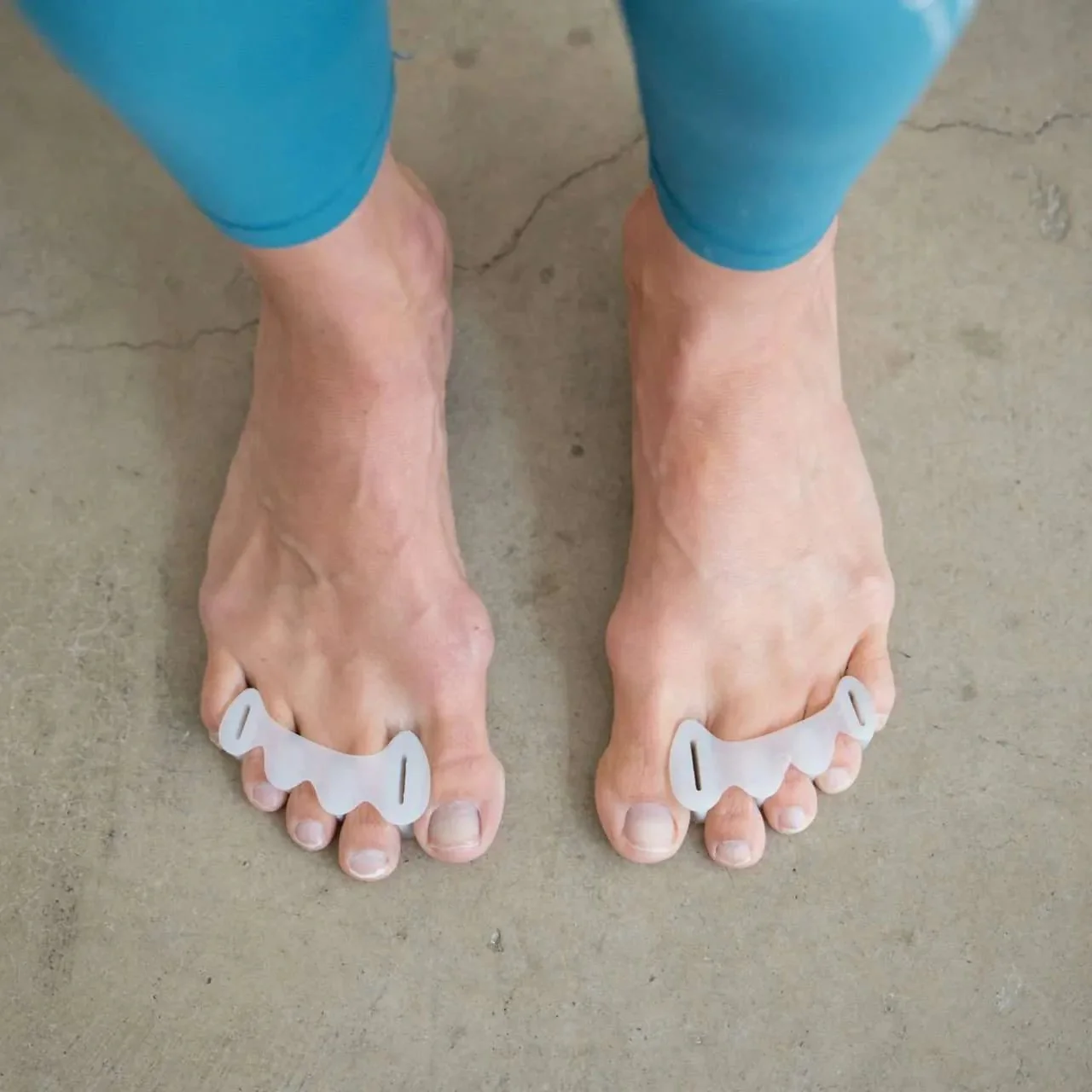
Gait Happens Spacers— “Restore10” discount at checkout
This style is made of moderately firm silicone and fits between the toes without loops around the outer toes. Examples include Correct Toes (now available in a slightly softer “Sport” version) and Gait Happens spacers.
Gait Happens spacers can be purchased individually or as part of a Foot Health Kit, which includes a release ball, resistance band, and specialty toe-strengthening bands—tools that support both mobility and strength. These kits are especially helpful for anyone looking to pair toe spacer use with a more active foot-care routine.
Style 2: Silicone Spacers With Loops
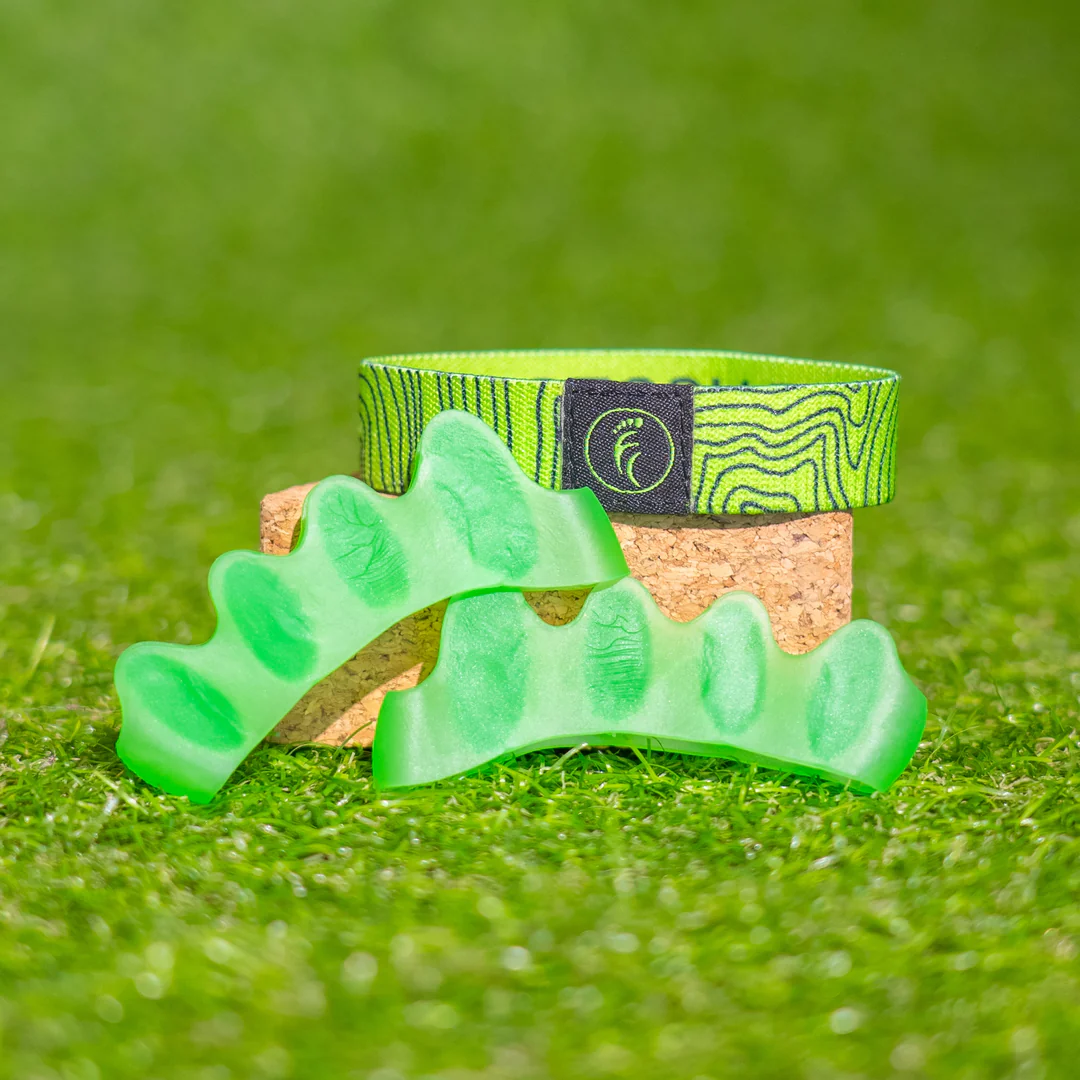
The Foot Collective “Wild Toes” — “Restore15” discount at checkout
This style is typically made of a softer silicone and includes loops that anchor over the first and fifth toes. Examples include Naboso Splay and The Foot Collective Wild Toes.
The Foot Collective Wild Toes are also available as part of a SoleMate Kit, which includes the multi-use SoleMate, mini roller, hacky sack, and toe bands. Both the SoleMate Kit and the Gait Happens Foot Health Kit are excellent tools for addressing both mobility and strength in the foot.
My Best Tips for Using Toe Spacers
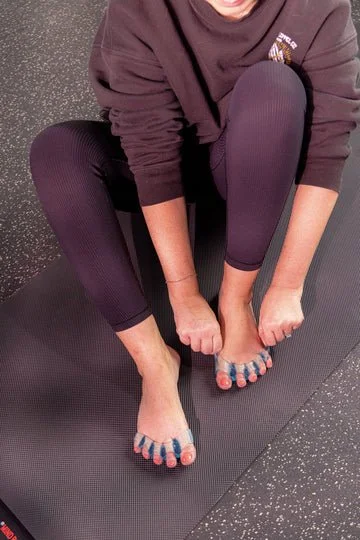
Naboso Splay spacers — “Restore10” discount at checkout
Start passively for 10–15 minutes if you’ve never worn them before, just to get used to the sensation
Gradually shift to wearing them around the house (barefoot is best!) for short periods
Slowly increase both the time and the activities you do while wearing spacers
Foot-shaped shoes are a must if you wear spacers inside—you may need a wider toe box than you think to avoid discomfort
Different styles fit and feel different; try both to see what works for you
It’s okay if you like both styles—or only one
If trying both, pay attention to your tolerance and duration with each style
Toe spacers take time to adjust to and work best when paired with an active routine focused on rebuilding mobility and strength of the entire foot, ankle, and lower leg. Will most people benefit? Absolutely. Are they a “magic fix” for all foot pain? Probably not.
Want more targeted and individualized tips to help restore your feet? Feel free to set up a Discovery Call or schedule your Evaluation to start your first step back to Restoring your movement and Reforming your life!
Foot Health Tools I Personally Use & Recommend
Some links below are affiliate links. I only share tools I personally use and trust. These support the work I do at Restore & Reform PT at no additional cost to you.
Gait Happens Toe Spacers
Available individually or as part of their Foot Health Kit (includes a release ball, resistance band, and toe-strengthening bands).
**Discount code: Restore10The Foot Collective Wild Toes
Loop-style spacers available individually or bundled with the SoleMate Kit (multi-use SoleMate, mini roller, hacky sack, and toe bands).
**Discount code: Restore15Naboso Splay Toe Spacers
A softer spacer option with loops for added security during movement.
**Discount code: Restore10